Table of Contents
- Introduction
- Applications in Retail
- Transformations in Financial Services
- Advancements in Healthcare
- Cybersecurity Enhancements
- Public Sector Innovations
- Challenges and Considerations
- The Future of Agentic AI
- Conclusion
- Sources and References
Introduction
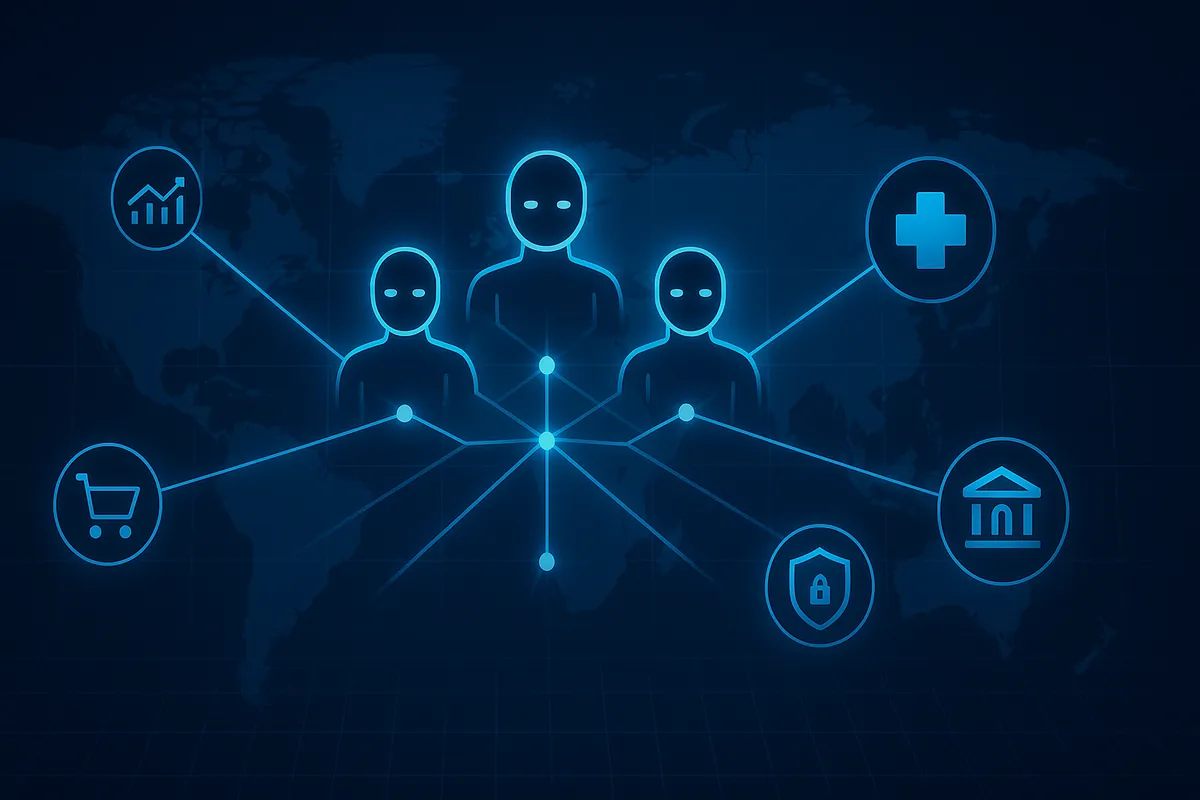
As of August 2025, Autonomous Agentic AI—defined by its ability to autonomously make decisions and execute tasks in real-time—significantly reshapes various industries. This report explores its most exciting applications, detailing impacts on operational efficiency, cost reduction, and innovative advancements across multiple sectors.
Applications in Retail
In retail, companies efficiently utilize Autonomous Agentic AI to enhance supply chain management and elevate customer interactions. Levi Strauss has successfully implemented agentic AI for demand forecasting and inventory optimization, resulting in a 25% reduction in stockouts and a 15% increase in profitability (DigitalDefynd). Moreover, retailers such as Walmart are employing AI-driven algorithms for personalized marketing, predicting consumer behavior, and improving inventory turnover.
Transformations in Financial Services
The financial sector is witnessing substantial transformations from Autonomous Agentic AI tools, enhancing productivity and operational efficiency. J.P. Morgan's IndexGPT autonomously analyzes market data to generate investment themes and adjust portfolios based on real-time financial trends (Forbes). Similarly, BBVA's internal GPT Store empowers employees to create micro-agents for tasks like client data analysis, boosting operational efficiency by 30%. Additionally, Citibank is exploring AI for risk assessment to better respond to evolving compliance requirements.
Advancements in Healthcare
The healthcare sector is dramatically changing due to Autonomous Agentic AI solutions. For instance, Skypoint has developed applications that automate administrative tasks including prior authorization and referral processes, leading to a 40% increase in staff capacity and a 50% reduction in patient care delays (OwlPost AI). Furthermore, AI-driven diagnostic tools are advancing early disease detection. IBM Watson Health, for example, leverages agentic AI for comprehensive analytical reviews.
Cybersecurity Enhancements
Organizations such as CrowdStrike and IBM employ AI agents capable of autonomously detecting and responding to cyber threats, analyzing vast data streams in real time and achieving a 70% improvement in threat detection rates and a 60% reduction in response times (DigitalDefynd).
Public Sector Innovations
In the public sector, Singapore's "Ask Jamie" virtual assistant highlights the utility of agentic AI in citizen engagement—achieving a 50% reduction in call-center volume and an 80% improvement in response times for FAQs (LinkedIn).
Challenges and Considerations
Despite its transformative potential, implementing Autonomous Agentic AI faces notable challenges. 78% of global firms report insufficient data readiness for deploying AI agents effectively (TechRadar). Moreover, identified vulnerabilities, such as those in Microsoft's NLWeb, highlight the need for robust security frameworks (Tom's Guide).
The Future of Agentic AI
The market shows strong growth: Mordor Intelligence estimates a valuation of $7.28B in 2025, rising to $41.32B by 2030 (CAGR 41.48%) (NASDAQ). Continued advances are likely to drive adoption across sectors.
Conclusion
The commercial applications of Autonomous Agentic AI, as of August 2025, span retail, finance, healthcare, cybersecurity, and public services. While the potential for efficiency and innovation is compelling, addressing data quality and security remains critical to unlocking full value.